




|
Quantity
|
Out of stock
|
||
|
|
|||
24V LED Strip Lights: Complete Guide to Choosing, Specs, and Wiring
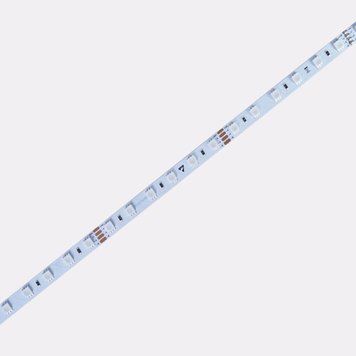
A 24V LED strip is a flexible circuit board fitted with SMD or COB LEDs, designed to run on 24V DC power. The main advantage of the 24V format over 12V is that it draws half the current for the same power output, so the strip holds even brightness across runs up to 10 m without dimming or yellowing at the far end. That makes 24V the go-to choice for long, seamless lighting runs: kitchen cabinetry, hallways, perimeter ceiling coves. ARTLED's range includes 24V strips in various LED densities, color temperatures, and IP ratings — from SMD2835 for even background lighting to dense COB strips with no visible dot pattern.
How 24V differs from 12V and 220V strips
The voltage difference directly affects the maximum seamless run length and the wire gauge you need. At the same power per meter, a 24V strip draws half the current of a 12V strip, so voltage drop over distance is far less of an issue.
✓ 12V — short, localized runs up to 5 m: shelves, furniture, small niches.
✓ 24V — long, seamless runs up to 10 m: kitchen cabinetry, hallways, ceiling perimeters, commercial spaces.
✓ 220V — outdoor lighting over tens of meters without a separate power supply per segment.
ARTLED tip. Planning a 6–10 m lighting run with no visible brightness transitions? Choose 24V over 12V — it removes the need for extra power-feed points partway along the run.
Technical specs: LED density, chip type, power draw
As with 12V strips, brightness and power draw depend on LED density per meter and the SMD chip type. In the 24V format, the cut segment is usually longer (5 or 10 cm instead of 2.5 cm on 12V strips), since each segment contains more LEDs wired in series.
| Density | SMD type | Power, W/m | Best for |
|---|---|---|---|
| 60 LED/m | SMD2835 | 4.8–6 W | Background lighting, coves, niches |
| 120 LED/m | SMD2835 / SMD5050 | 9.6–14.4 W | Kitchens, task areas, ceiling coves |
| 180 LED/m | SMD2835 | 14.4–18 W | Primary interior lighting |
| COB (no visible dots) | COB | 14–24 W | Premium lighting, dot-free linear runs |
Every 24V strip model in the ARTLED catalog lists its LED density, power per meter, and color temperature (2700K–3000K warm white, 4000K neutral, 6000–6500K cool white), along with RGB and RGBW options for dynamic color lighting.
IP rating — which strip goes where
✓ IP20 — no protection, dry rooms only: shelves, ceilings, indoor furniture.
✓ IP65 — silicone-coated on top, splash-resistant: kitchen backsplash, bathroom, canopy lighting.
✓ IP67 — fully silicone-sealed, rain and dust protection: outdoor architectural lighting, fences.
✓ IP68 — fully sealed, submersible: pool, fountain, and pond lighting.
Power supply: how to size it
Size the power supply for a 24V strip using the same formula as for 12V: strip length (m) × power per meter (W) × 1.2–1.3 (a 20–30% margin for stable, cool operation). The difference is the lower operating current: at the same power output, a 24V system draws half the amperage of a 12V system, letting you use thinner wire over the same distance.
Example: 10 meters of a 120 LED/m strip (12 W/m) = 120 W rated draw. With a 25% margin, you need a 150 W power supply.
ARTLED tip. For damp or outdoor zones, choose an IP65/IP67-rated power supply even if the strip itself is water-resistant — the power supply's electronics are just as vulnerable to condensation as the LED chips.
Wiring and installation
✓ Only cut the strip along the marked lines with the scissor icon — cut spacing is usually 5 or 10 cm depending on the model.
✓ Join segments with solderless connectors (dry indoor spaces) or solder with copper wire of 0.75 mm² or thicker (more reliable, and required for IP65+).
✓ For runs longer than 10 m, feed power from both ends or use a booster cable of 1.5 mm².
✓ The 3M adhesive backing lasts 5–7 years on a clean, degreased surface; for aluminum or demanding conditions, add a mounting profile.
✓ Use a dimmer for monochrome strips, or an RGB/RGBW controller with a remote or Wi-Fi control for color adjustment.
Common mistakes when choosing and installing
✓ Using a 12V power supply on a 24V strip (or vice versa) — the strip either won't light up or fails instantly from an over/under-voltage condition.
✓ Undersized power supply — causes overheating, protection trips, and a shortened lifespan.
✓ Runs too long without boosted power — even at 24V, the strip dims at the far end once you exceed the recommended 10 m.
✓ IP20 strip in a damp area — contacts corrode quickly and fail within months.
✓ Cutting outside the marked line — disables the last segment of the strip.
Conclusion
A 24V LED strip is the best choice for long, seamless lighting runs where even brightness matters and you don't want dimming at the far end. Choosing the right LED density, IP rating, and a power supply with adequate margin ensures stable, bright light for the strip's full rated lifespan — up to 50,000 hours.
Choose a trusted supplier. The ARTLED catalog carries 24V LED strips in every density, IP rating (IP20–IP68), and color temperature, plus matching power supplies, controllers, and mounting profiles. ARTLED's specialists can help you build the right kit and calculate the required power free of charge.