


|
Quantity
|
Cost
|
||
|
|
|||
Signal Repeaters for Lighting Control: How to Choose
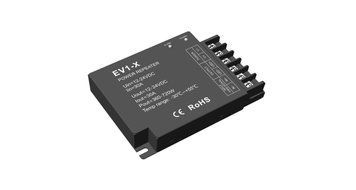
A signal repeater sends control commands to additional LED strip sections or remote lighting zones. It is needed when one controller is not enough because of run length, multiple zones or limited output power. The device preserves the selected color, brightness or lighting effect.
Short answer: use a repeater for long or high-power RGB, RGBW or single-color runs when the controller cannot power the entire strip directly. For addressable models, use only a device compatible with the specific SPI protocol.
When a signal repeater is needed
| Situation | Problem | Solution |
|---|---|---|
| Long LED strip | Controller cannot handle the load | Repeater and separate power supply |
| Several RGB zones | Colors must change in sync | RGB repeater for the required voltage |
| Remote zone | Signal or power is lost | Repeater and power near the strip |
| Addressable SPI strip | Data signal becomes distorted | SPI repeater for the required chip |
Important: a repeater does not fix voltage drop. Power the additional section separately with a suitable power supply.
Repeater or amplifier
A repeater restores and passes the signal, while an amplifier may also switch additional power. Check the signal type, channels, voltage and maximum current.
How to connect a repeater
Connect the input to the controller, the output to the next strip section, and provide separate power at the same voltage. Observe polarity and do not mix up the R, G, B and W channels.
Frequently asked question
Does a short strip need a repeater?
Usually not. Use one when the controller cannot handle the load, the signal is lost or several zones must be synchronized.
Conclusion
A repeater expands the lighting control system without replacing the main controller. Check the signal, voltage, channels, current and separate power arrangement before choosing one. Addressable strips require compatibility with the specific SPI protocol.
ARTLED can help you choose a repeater, amplifier, controller and power supply for your LED system.