COB vs SMD LED Strip: Which Is Better and When
If you're choosing an LED strip and feel lost in the labelling — you're not alone. At first glance, COB and SMD look similar: both are flexible, both emit light. But their working principles, light quality, and areas of application are fundamentally different. Let's break it down without the marketing fluff: what they are, how they differ, and which to choose for a specific task.
What Is an SMD Strip and How Does It Work
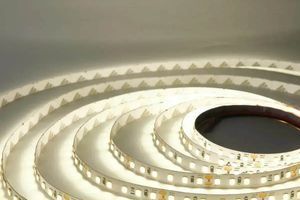
SMD (Surface Mounted Device) is the classic LED strip format. Individual diodes are soldered onto a flexible board at a set pitch. Each diode is an independent light source, so individual light dots are visible up close.
The most popular SMD diode types:
✓ SMD 3528 — small diode at ~0.08 W, soft light, low brightness
✓ SMD 2835 — improved version of the 3528, more efficient and brighter at the same footprint
✓ SMD 5050 — three chips in one package, available in RGB or single colour
✓ SMD 5630 / 5730 — high-power diode for accent and general lighting
Diode density is measured per metre: 60, 120, or 240 pcs/m. The higher the density, the more uniform the light and the less visible the individual dots.
What Is a COB Strip and How Is It Different
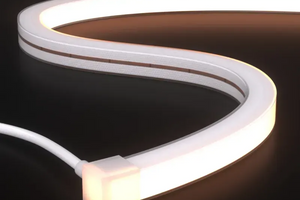
COB (Chip On Board) is a newer technology where hundreds of micro-chips are placed side by side and covered with a shared phosphor layer. Instead of individual diodes, you see a continuous light strip with no dots or shadows.
Key features of COB:
✓ From 256 to 720+ chips per metre — no visible pitch between diodes
✓ Uniform light strip with no graininess or dots
✓ Narrower strip — typically 8 mm vs 10–12 mm for SMD
✓ Less heat loss due to even chip distribution
✓ Lower flicker rate — better for extended time spent in the room
COB vs SMD Comparison: Key Differences
| Parameter | SMD | COB |
|---|---|---|
| Light uniformity | Individual dots visible | Continuous strip, no dots |
| Brightness | High (depends on type) | Medium or high |
| RGB / colour option | Yes (SMD 5050, WS2812) | Single colour or CCT only |
| Price | Lower | Higher |
| Flicker | Depends on power supply | Lower with quality PSU |
| Suitable for open profile | Partially | Ideal |
Where SMD Strip Works Best
SMD is a proven and versatile format that remains the go-to choice for most installations. Choose SMD when you need:
✓ RGB or colour scenes — COB doesn't yet support full RGB
✓ Accent lighting for furniture, niches, or ceilings — SMD 2835 or 5630 handles this well
✓ Budget installation — SMD is significantly cheaper for the same lumen output
✓ Hidden installation behind a solid profile — you won't notice any difference from COB anyway
Where COB Strip Works Best
COB wins where light quality matters more than price. Choose COB when you need:
✓ Mirror backlighting — an even strip with no shadows from individual dots
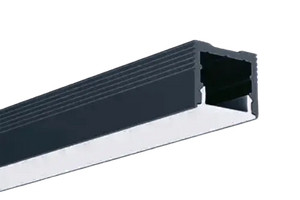
✓ Open aluminium profile — the strip is visible and needs to look clean
✓ Kitchen worktop or home office — uniform, flicker-free light reduces eye strain
✓ Furniture with glass fronts — where the strip is visible through glass or a frosted cover
✓ Premium-class projects — where aesthetics and installation quality matter
How to Choose: 4 Parameters Beyond Strip Type
The strip type is just one criterion. Before buying, check four more parameters that directly affect the result.
Common Mistakes When Choosing
✓ Choosing COB just because it's trendy. If the strip is hidden behind a solid profile, you won't see any difference — you'll just pay more.
✓ Ignoring CRI. A bright strip with CRI 70 produces unattractive, distorted light — especially noticeable on a face in a mirror.
✓ Skimping on the power supply. A cheap PSU causes flicker that strains the eyes even when it's not visible.
✓ Mixing colour temperatures. COB 3000K + SMD 4000K in one room will produce uncomfortable, mismatched lighting.
Conclusion: Which One to Choose
There's no "better" strip — only the right one for the job. SMD is the reliable choice for most installations: flexible, affordable, and available in a wide range of power outputs and colours. COB is the choice for light quality and aesthetics where the strip is visible or where uniformity without dots matters.
If you're not sure which strip suits your project — contact our consultants. We'll help you choose the right type, power, and colour temperature for your space, free of charge.