LED Profile: Why You Need It
An LED profile is not just a decorative housing for the strip — it's an important installation element that improves safety, dissipates heat, protects against dust, and makes the lighting even. For quality lighting, it's needed in every project with LED strips, especially when it comes to permanent or built-in installation.
Why an LED profile is needed
An LED profile performs several key functions that affect the system's operation and appearance:
✓Strip protection — from dust, moisture, impacts, and accidental contact.
✓Heat dissipation — the aluminum housing draws heat away from the LEDs and extends their lifespan.
✓Even lighting — the diffuser smooths out light spots and makes the illumination softer.
✓Clean installation — the profile keeps the strip in a straight line and lets you hide it in a wall, ceiling, or furniture.
✓Aesthetics — the finished cutout looks professional and delivers a neat finish with no exposed wires.
How the profile affects LED lighting longevity
LED strips heat up during operation. If the strip sits on plastic or is simply glued to a surface, heat dissipates poorly and the LEDs degrade faster. An aluminum profile works like a heatsink:
✓ lowers the temperature under the strip by 5–10°C;
✓ reduces the risk of overheating during extended operation;
✓ increases the strip's service life and color stability.
Types of LED profiles
There are several types of profiles chosen for specific applications:
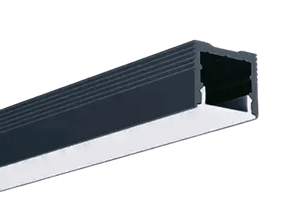
✓Recessed profile — mounted into a niche or groove, suitable for strictly concealed lighting.
✓Surface-mounted profile — attached to the surface, easy to install and remove.
✓Corner profile — for decorative lighting of niche corners, furniture, or stairs.
✓Profile with frosted diffuser — best for soft, even light with no visible dots.
✓Clear diffuser — for the brightest light with minimal diffusion.
When to choose a profile
A profile is recommended for all permanent installations, but especially where appearance and longevity matter:
✓ niche lighting for ceilings and walls;
✓ lighting for furniture, cabinets, shelves, and display cases;
✓ stairs and floor lighting;
✓ bathrooms and kitchens, where moisture resistance matters;
✓ commercial projects, storefronts, and exhibition stands.
How to choose an LED profile for your project
To choose the right profile, pay attention to several parameters:
✓Mounting type — recessed or surface-mounted;
✓Strip width — 10 mm, 12 mm, 15 mm, or 20 mm;
✓Diffuser type — frosted for soft light, clear for maximum brightness;
✓Moisture resistance — IP20 for dry rooms, IP65 and above for kitchens, bathrooms, or outdoor use;
✓Mounting hardware compatibility — whether the profile comes with mounting clips, end caps, and corner connectors.
Profile advantages compared to direct mounting
| Parameter | Without profile | With profile |
|---|---|---|
| Dust and moisture protection | Low | High |
| Heat dissipation | Limited | Good |
| Light evenness | Worse | Better |
| Installation neatness | Low | High |
| Strip lifespan | Shorter | Longer |
Installation tips
✓ Install the profile on a flat, clean surface.
✓ Use silicone or mounting adhesive if the profile is fitted into a niche.
✓ Close the ends with caps to keep dust out.
✓ If using an IP65 profile, make sure the seams stay sealed.
✓ Choose a profile 5–10 mm longer than the strip so you can route the wiring inside.
FAQ
Can an LED strip be used without a profile?
Yes, it can, but that's only suitable for temporary or budget solutions. For even, long-lasting lighting, it's better to mount the strip in a profile.
Which is better — a frosted or a clear diffuser?
A frosted diffuser hides the individual light points better and gives softer light. A clear one is for maximum brightness, when intensity matters more than evenness.
What makes an IP65 profile different?
It's a profile with a sealed housing and diffuser that protects the strip from splashes and dust. It's suitable for kitchens, bathrooms, and outdoor installations.
Can an LED profile be installed by yourself?
Yes, if you have basic tool skills. It's important to keep it level, install it cleanly, and cut the diffuser correctly.
Conclusion
An LED profile is an important element for quality lighting. It protects the strip, dissipates heat, improves the look, and extends the service life. If you want a professional-looking installation, it's worth choosing a profile from the start rather than mounting the strip openly.
In most cases, the right profile is the simplest way to get an attractive and reliable LED installation without unnecessary problems.