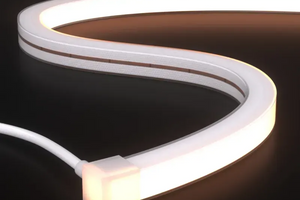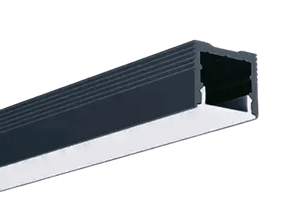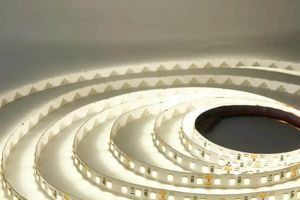
🟩 When choosing an LED strip light, many people focus on brightness, colour temperature, or length—but often overlook one of the most critical technical specifications: the IP rating. This rating indicates how well a device is protected against dust, moisture, or even full submersion in water. For LED products installed in challenging environments—such as outdoors, in bathrooms, near swimming pools, or in industrial settings—the IP rating is absolutely essential. In fact, the IP protection level tells you whether your LED strip will withstand rain, steam, or immersion without failing.
IP (Ingress Protection) is an internationally recognised classification system defined by two digits: the first indicates protection against solid particles (like dust), and the second refers to water resistance. For instance, an IP65 LED strip is dust-tight and can handle water jets, whereas an IP68-rated LED strip offers full protection even during prolonged submersion.
With the growing demand for LED lighting in outdoor spaces, façades, landscaping, and humid environments, selecting the right IP rating is not just a matter of durability—but also of safety. In this article, we’ll compare the most common LED protection ratings—IP65, IP67, and IP68—and help you choose the most suitable option for your project.
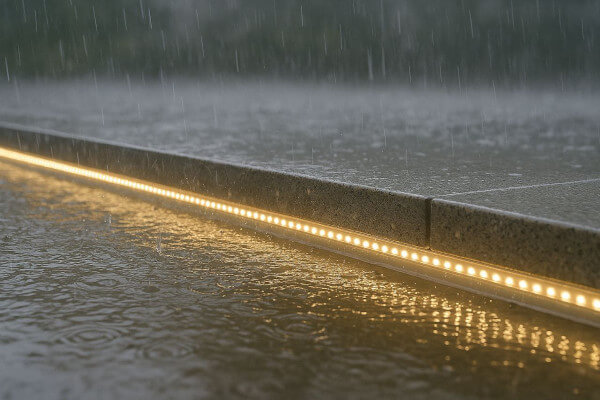
Understanding IP Ratings: What Do the Numbers Mean?
🟨 The IP (Ingress Protection) rating is a globally used standard that indicates how resistant an electronic device is to environmental factors like dust, water, or dirt. For LED strips, this rating is particularly important when installing lighting in areas exposed to moisture or outdoor conditions.
An IP code typically takes the form IPXY, where:
- X – the first digit refers to protection against solid objects (dust, sand, debris);
- Y – the second digit indicates water resistance (splashing, jets, submersion).
Common IP Digits Explained:
- 6 – Maximum dust protection. Completely dust-tight. Ideal for outdoor and harsh environments.
- 5 – Protected against water jets from any direction. Suitable for semi-damp locations like covered outdoor areas.
- 7 – Withstands short-term submersion in water (up to 1 metre for 30 minutes). Great for bathrooms and poolside areas.
- 8 – Fully waterproof for long-term submersion. Typically used in fountains, pools, or aquariums.
Understanding the IP code helps you select the right LED strip for specific conditions, avoiding unnecessary damage or overspending.
Comparison Chart: IP65 vs IP67 vs IP68
🟦 To determine which IP rating is best for your project, it's helpful to compare the key features of each type—IP65, IP67, and IP68. All three offer complete dust protection (first digit "6"), but differ significantly in moisture resistance, installation scenarios, and cost.
If you're trying to decide between IP65, IP67, and IP68, the table below outlines their main differences to help you make a quick, informed choice:
|
Feature |
IP65 |
IP67 |
IP68 |
|
Dust Protection |
Full |
Full |
Full |
|
Water Protection |
Water jets from any angle |
Submersion up to 1m (30 min) |
Long-term submersion (1m+) |
|
Typical Installation |
Outdoor under roof |
Bathrooms, showers, terraces |
Underwater (pools, fountains) |
|
Installation Difficulty |
Easy |
Moderate |
Complex (requires sealing) |
When to Choose Each IP Rating
🟧 Choosing the right IP level not only extends the life of your LED strip but also helps avoid unnecessary repairs or replacements. Each rating has its best use cases, depending on the environment. Here's a breakdown of where and when to use IP65, IP67, or IP68:
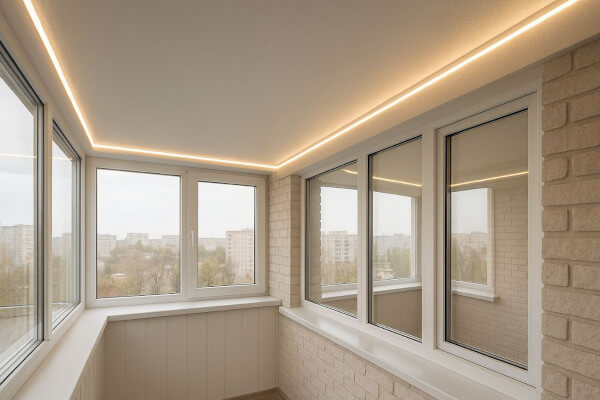
IP65 – For Dry or Semi-Protected Areas
IP65-rated LED strips are fully dustproof and protected against water jets from any direction. They are not suitable for direct water contact or submersion but work well in areas exposed to occasional moisture or rain splashes.
Ideal for:
- Balconies, covered terraces, patios
- Building façades with roofing
- Garage, entryway, or warehouse lighting
- Outdoor decorative lighting without direct rainfall
This is an affordable and practical choice for semi-sheltered or dry areas.
IP67 – For Damp Environments and Outdoor Use
IP67 LED strips are fully dust-tight and can handle short-term submersion in water (up to 1 metre, for up to 30 minutes). They’re perfect for areas with high humidity or where water splashes may occur.
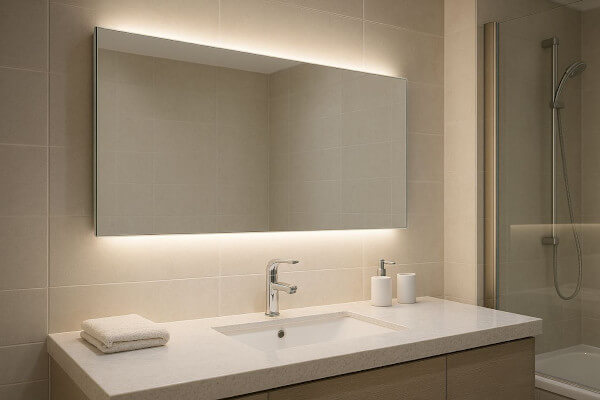
Ideal for:
- Bathrooms and shower zones
- Outdoor terraces, pergolas, gazebos
- Outdoor stair lighting
- Outdoor areas without full water exposure
- Kitchen splash zones
IP67 is the “sweet spot” between basic protection and high-end waterproofing, making it a great choice for both domestic and commercial projects.
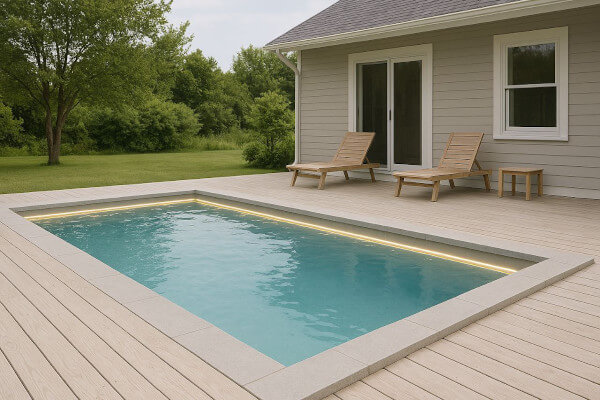
IP68 – For Full Water Submersion
If your LED strip will be submerged or constantly exposed to moisture, IP68 is the highest level of protection. It allows continuous underwater operation (depth and duration depend on the specific model).
Ideal for:
- Swimming pools and fountains
- Waterfalls, aquariums
- Ponds, water features in landscaping
- Specialised equipment in aquatic or industrial settings
Important: Installing IP68 lighting requires proper sealing of all connections and strict adherence to manufacturer instructions. While it’s the most expensive option, it’s indispensable for extreme conditions.
Pros and Cons of LED Strip Lights with IP65, IP67 and IP68 Ratings
IP65 – Advantages and Disadvantages
🟩 Advantages:
- Affordable pricing – one of the most cost-effective options with protection against dust and low-pressure water jets.
- Full dust protection – ideal for dusty environments and outdoor sheltered areas.
- Water jet resistance – IP65 outdoor LED strip is suitable for use under roofed patios, balconies, garages, and other semi-outdoor areas.
- Easy to install – no need for complex waterproofing at connections.
🟥 Disadvantages:
- Not suitable for direct water contact – cannot withstand heavy rain or submersion.
- Limited water resistance – not recommended for use in bathrooms, pools, or fountains.
- Shorter lifespan in damp conditions – improper installation may lead to quicker failure.
IP67 – Advantages and Disadvantages
🟩 Advantages:
- High protection against dust and moisture – can be submerged in water up to 1 metre for up to 30 minutes.
- Versatile – suitable for bathrooms, terraces, and outdoor areas where water exposure is occasional (e.g., IP67 LED strip for bathroom use is a solid choice for humid zones).
- Relatively easy installation – doesn’t require complex sealing if instructions are followed.
- Great price-to-performance ratio – more durable and reliable than IP65.
🟥 Disadvantages:
- Higher cost compared to IP65.
- Limited submersion – not suitable for prolonged or deep underwater use.
- Requires careful installation – improper sealing may compromise waterproofing.
IP68 – Advantages and Disadvantages
🟩 Advantages:
- Maximum dust and water protection – suitable for continuous use underwater at depths greater than 1 metre.
- Waterproof IP68 LED strips – the ideal solution for pools, fountains, aquariums, or fully submerged environments.
- Exceptional durability – works reliably even in harsh and wet conditions.
🟥 Disadvantages:
- Higher price – the most expensive option among the three.
- Complex installation – requires professional-level sealing, tools, and experience.
- Strict adherence to manufacturer instructions is necessary to maintain waterproofing.
- Limited flexibility for cutting or resizing – improper handling may void water protection.
💡 Note: When wiring your LED strip, ensure the wire cross-section matches the strip's power requirements and cable length. See this wire gauge calculation table for more information.
How to Avoid Overpaying: Choose the Right Strip for Real Conditions
🟨 Choosing the correct LED strip with the appropriate IP rating is not just about quality – it’s also about saving money. Many people end up overpaying for waterproof protection they don’t actually need. In this section, we’ll explain how to select the right strip for your specific environment and provide real-world examples.
When IP65 Is Enough
LED strips with IP65 provide full dust protection and resist water jets, but they are not waterproof for submersion. This makes them ideal for common home and garden applications like lighting under covered patios, balconies, garages, or eaves. For instance, an IP65 outdoor LED strip works well in semi-damp areas without direct water contact. If your setup is sheltered, IP65 will be more than sufficient.
Going with IP65 can significantly cut costs – both in product price and installation effort, since these strips don’t require additional sealing or special connectors.
Why IP68 Can Be Overkill and Costly
IP68 provides the highest level of water resistance – built for full, long-term submersion. It’s necessary for pools, water features, aquariums, or specific industrial use. However, for most home or garden projects without constant water contact, the added cost is unnecessary.
IP68 strips are not only more expensive, but they also require extra installation steps, specialist tools, and careful waterproofing. If your space is only occasionally wet or humid, consider IP65 or IP67 instead – it’s a smarter investment.
Examples from Real-Life Projects
● Covered Balcony: An IP65 LED strip was used for ambient lighting. Despite seasonal rain and humidity, the strip has worked flawlessly for several years.
● Bathroom: An IP67-rated LED strip for bathroom lighting was chosen to handle occasional splashes and high humidity – no failures so far.
● Garden Pool: An IP68 LED strip was installed in a small backyard fountain. The cost and installation effort paid off with long-term, uninterrupted performance.
To avoid overpaying, evaluate the actual environmental conditions where you plan to install the LED strip. For dry or semi-protected areas – IP65 is sufficient. For moisture-prone areas or occasional water contact – IP67 is the smart choice. Only choose IP68 when full submersion is necessary. This approach balances your budget with performance and ensures long-lasting lighting.
🟩 IP65, IP67, and IP68 all serve different purposes. IP65 is perfect for partially covered outdoor spaces without direct water contact. IP67 adds extra protection for humid rooms or light water exposure. IP68 is best for submerged or highly demanding environments.
The key is not to go for the most expensive or “best” strip – but to choose the one that meets your actual needs. This way, you avoid overspending and ensure reliable performance over time.
🔍 Browse all LED strips with IP65
🔍 Browse all LED strips with IP67 / IP68
For more information or help choosing the right LED strip for your project, visit artled.com.ua – you'll find a wide selection and expert guidance tailored to your needs!